Patient Guide
Hair transplant in Turkey vs the UK: cost, regulation and what you actually get
Quick answer: In the UK the NHS puts the cost of a hair transplant at anywhere between £1,000 and £30,000, depending on how much hair you've lost and the clinic, and packages with my partner clinics in Turkey start at €2,800 (around £2,400) including hotel, transfers and aftercare, with flights on top. The price gap is real, but it's not the whole story. The differences that matter are how each country regulates clinics, who does the work, whether you meet the doctor before paying, and what happens once you're home. Neither country is automatically better, the clinic is what decides your result.
On this page
Most people start with the price, and I understand why, because the gap is big enough to make you wonder what the catch is. So I'll start there too, and then go through the things I'd actually base the decision on.
Cost, like for like
The NHS says a hair transplant in the UK can cost anywhere between £1,000 and £30,000, depending on the extent of your hair loss, the type of procedure and the quality of the clinic and its team. That's a wide range, and the only way to narrow it is to get written quotes for your own case. A UK quote normally covers the consultation, the procedure and your pre and post-op care and medication, and it doesn't include any travel, because you don't need any.
In Turkey, packages with my partner clinics currently start at €2,800, which is around £2,400, and that includes your hotel, airport and clinic transfers, the procedure and your aftercare. You book your own flights, so add those on, and if someone's coming with you the hotel costs a little more. Your exact price depends on how many grafts you need and which clinic you go with, and you'll always have it in writing before you decide anything.
Two things to be careful about when you compare. First, a headline price on its own tells you very little, because what's included varies a lot, and I've written a whole guide on what a transparent quote should include. Second, the price of getting it wrong is the same in both countries, and it's high. A repair is harder work than a first procedure, it usually costs more, and some of what's lost can't be bought back at any price. I know that one from experience, and it's why I'd never choose on price alone in either country.
How each country regulates it
Both countries regulate hair transplants. The difference is in how, and in what you can do if something goes wrong.
In England, a clinic carrying out hair transplant surgery has to register that activity with the Care Quality Commission, and its inspection history is public. The doctor doing the surgery has to be on the General Medical Council register with a licence to practise, and the UK professional bodies say the surgical steps, meaning opening the channels and harvesting the grafts, should be done by a GMC-licensed doctor. The NHS also points out that the GMC requires a face-to-face consultation before cosmetic surgery is planned. If you're unhappy, you can complain to the GMC about the doctor and to the CQC about the clinic, and that route is one of the real advantages of staying at home.
In Turkey, every clinic is regulated by the Ministry of Health, and since 2023 there's been a regulation written specifically for hair transplant units. A clinic needs a licence, it's inspected, the doctor opening the channels needs the Ministry's hair transplant certificate, and the assistants need their own certificates. The Ministry publishes a list of providers approved for international patients, and the UK Foreign Office points British patients to it. The joint guidance from the UK and Turkish surgical associations notes that the UK complaints route through the GMC and CQC isn't always matched abroad, which is fair, and it's why the checks have to happen before you book rather than after.
There's more detail on the Turkish side in is a hair transplant in Turkey safe, and on how I confirm a licence in how I vet clinics.
Who does the work
This is the question I'd put above price, in either country.
In the UK, the guidance is that a doctor opens the channels and harvests the grafts, with the team placing them. In Turkey, the doctor opens the channels, and extraction and placement vary by clinic and by package. At some clinics the doctor does more of the hands-on work, sometimes as a higher priced option, and at others a trained team does the extraction and placement with the doctor planning the work and opening the channels. Just to be clear, I don't think the team doing that work is a problem. The teams at my partner clinics are excellent and your result depends on them as much as on the doctor. The problem is not knowing, and being told after the fact.
It's also worth saying that the same question applies at home. Guidance is guidance, not a guarantee, so I'd ask who does each step wherever you go, in the UK as much as in Turkey, and ask for it in writing before you pay. Here's how to ask it so you get a straight answer.
Consultation and time to think
This is where the UK has a clear structural advantage, and I'm not going to pretend otherwise. At home you'd normally see the doctor face to face, go away, and come back a couple of weeks later, which gives you a cooling-off period before you commit.
Going to Turkey, you usually meet the doctor the day before or on the morning of the procedure. The joint UK and Turkish guidance says you should meet the doctor who'll perform your surgery, that doctor should be the one recommending the method, the graft count and the hairline, and you should have two weeks to consider the recommendation and consent form before paying any deposit. That's the standard I'd want you to be able to hold any clinic to.
The way I work is built around that gap. You'll have as many calls with me as you need, the clinic assesses your photos and plans the procedure before any quote, you get everything in writing with no deadline from my side, and the doctor sees you in person before anything is done. What I can't give you is a face-to-face consultation in the UK two weeks before you fly, and if that matters a lot to you, it's a fair reason to stay at home.
Aftercare, and if something goes wrong
In the UK, if you have a complication after surgery, it's the surgeon's responsibility to provide follow-up treatment, and you can go back to the clinic. The NHS advice on cosmetic surgery abroad warns that overseas clinics may not provide follow-up treatment, and that there may be no UK professional you can see if problems come up.
That's the honest trade-off with Turkey: your aftercare is at a distance. It can work very well, with a written plan, photos on WhatsApp, and a doctor who checks your progress and your final result, which is what the joint guidance says should happen and what I ask for. Or it can mean a number that goes quiet. Every clinic I work with gives you its aftercare plan in writing before you travel, puts in writing what it would do if a result isn't right, and I stay in touch with you for twelve months after your treatment. The NHS may not provide corrective treatment after cosmetic surgery done abroad, and ordinary travel insurance usually excludes it, so if you want cover for complications you'll need specialist medical travel insurance, and I'd read the policy before you book.
Experience and volume
Turkey does more hair transplants than any other country, and that volume is why some Turkish doctors have done more procedures than most UK surgeons will in a career, and it's also why the number of patients a clinic treats in a single day matters so much. A doctor can only plan and open channels for so many people before the care thins out. I check that number for every clinic, and I'd encourage you to do the same sum wherever you go.
Side by side
| What you're comparing | United Kingdom | Turkey (my partner clinics) |
|---|---|---|
| Typical cost | Anywhere between £1,000 and £30,000 (NHS), depending on your hair loss, the procedure and the clinic | From €2,800 (around £2,400) including hotel, transfers and aftercare, plus your flights |
| Regulator | Care Quality Commission (England) for the clinic, General Medical Council for the doctor | Ministry of Health licence for the clinic and certificates for the doctor and assistants |
| Who does the surgical steps | Guidance says a GMC-licensed doctor opens the channels and harvests the grafts | Doctor opens the channels; extraction and placement vary by clinic and package, confirmed in writing |
| Consultation | Face to face, with a cooling-off period of around two weeks | Calls and a photo assessment first, then the doctor in person before the procedure |
| Time away | None, a day for the procedure | Three days, two nights in a hotel |
| Follow-up | In person at the clinic, the surgeon is responsible for complications | At a distance, with a written aftercare plan and a contact route; I stay in touch for twelve months |
| If you're unhappy | Complain to the GMC or the CQC | The clinic first, then the Ministry of Health; the UK route doesn't apply |
| Insurance | Clinic's own cover; check what it includes | Ordinary travel insurance usually excludes it; specialist medical travel cover exists |
Which is right for you
I run a business that organises treatment in Turkey, so you'd expect me to say Turkey, but I'd rather you made the decision for the right reasons and were happy with it in a year's time.
The UK makes sense if a face-to-face consultation and a cooling-off period matter a lot to you, if you want to walk back into the same clinic for every check-up, if the thought of having a procedure abroad would stop you sleeping, and if the cost is within reach.
Turkey makes sense if the cost difference is the difference between doing this and not doing it, if you're comfortable travelling and with aftercare at a distance, and if you're prepared to do the checks, or have someone do them with you, so that you know exactly who's treating you before you pay. Done that way, I think it's a very good option, and it's the one I chose the second time around.
Want a written quote from a vetted clinic in Turkey to compare with what you've been quoted at home?
Get in touchFrequently asked questions
Why is a hair transplant cheaper in Turkey than in the UK?
Mostly because clinics there have lower running costs, treat far more patients, and price in a currency that's weak against the pound, so the same work costs less to deliver. It doesn't automatically mean corners are cut, and it doesn't automatically mean they aren't. The only way to know is to look at who does the work and how many patients they treat a day, which is exactly what I check.
Does the NHS do hair transplants?
No. Hair loss is treated as cosmetic, so the NHS doesn't fund hair transplants, and whichever country you choose you'll be paying privately. The NHS may also not provide corrective treatment after cosmetic surgery done abroad, which is worth knowing before you decide.
Is the quality worse in Turkey?
Not as a rule. Some of the most experienced hair transplant doctors in the world work in Turkey, and it does more procedures than anywhere else. Quality varies from clinic to clinic, the same as it does in the UK, so compare clinics rather than countries.
Can I have my consultation in the UK and the procedure in Turkey?
With me, you'll have as many calls as you need before you decide, and the clinic assesses your photos to plan the procedure and your quote. The doctor then sees you in person before anything is done, and you don't pay the balance until then. What you won't get is a face-to-face consultation two weeks before you fly, which is one of the real differences from the UK and worth weighing up.
If my first transplant failed, should I have the repair in the UK or Turkey?
Have it wherever the surgeon who's best at repair work is, because that matters far more than the country. Repair work is harder and usually costs more in either place. I've written about it in whether a failed hair transplant can be fixed.
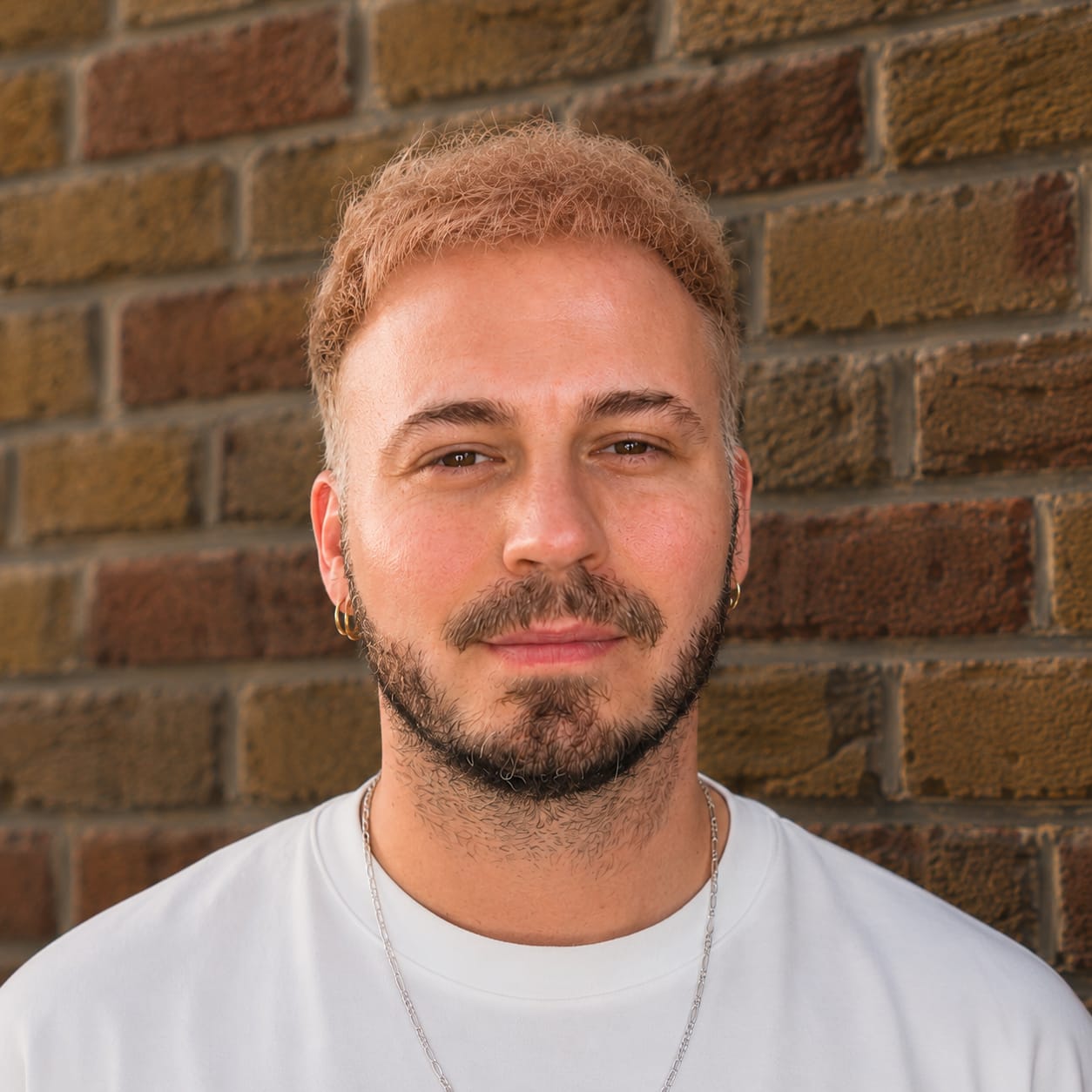
Written byJon Corke
Founder of Resolute Hair, a former emergency and critical care nurse, and a hair transplant patient twice. He organises the clinic, the written quote, the trip and the aftercare for patients from the UK and Ireland. The clinic's doctor makes every medical decision. More about Jon.
Sources
Independent clinical, professional and government sources consulted in writing this page. The UK price range is the NHS's published range and is a guide, not a quote. Links open in a new tab. Last checked 20 November 2026.
- Cosmetic surgery abroad. NHS. View source
- Surgery abroad without NHS referral. NHS Scotland. View source
- Turkey travel advice: Health, including medical tourism. UK Foreign, Commonwealth and Development Office. View source
- UK and Turkish medical associations unite to issue minimum guidelines for hair transplant surgery (BAHRS, BAAPS, BAPRAS and TSPRAS, December 2023). British Association of Aesthetic Plastic Surgeons. View source
- Hair transplant. NHS. View source
This page is general information for UK adults comparing a hair transplant at home with one in Turkey. Prices change, the UK range is the one the NHS publishes, and the Turkey figure is the current starting price with my partner clinics, confirmed in your written quote. It isn't medical or financial advice. A qualified clinician should always assess whether a procedure is appropriate for you.