Founder Story
My hair transplant in photos.
In short: Two procedures. The first one failed and left permanent scarring on my donor area, which you can see below. The second worked. These are just phone photos I took at the time, not a proper clinical set, and I've left them that way on purpose.
Before you scroll. I took these on my phone, in bathrooms and hallways, under whatever light happened to be there. The angles are all over the place, the lighting changes, and the hair length isn't consistent.
I could have picked the flattering ones and matched them up. Clinics do it constantly, and when the lighting and angle and hair length have all changed between two photos, you can't actually conclude anything from them. That's usually the point. So here's what I've actually got, and where it falls short.
What the first procedure left behind
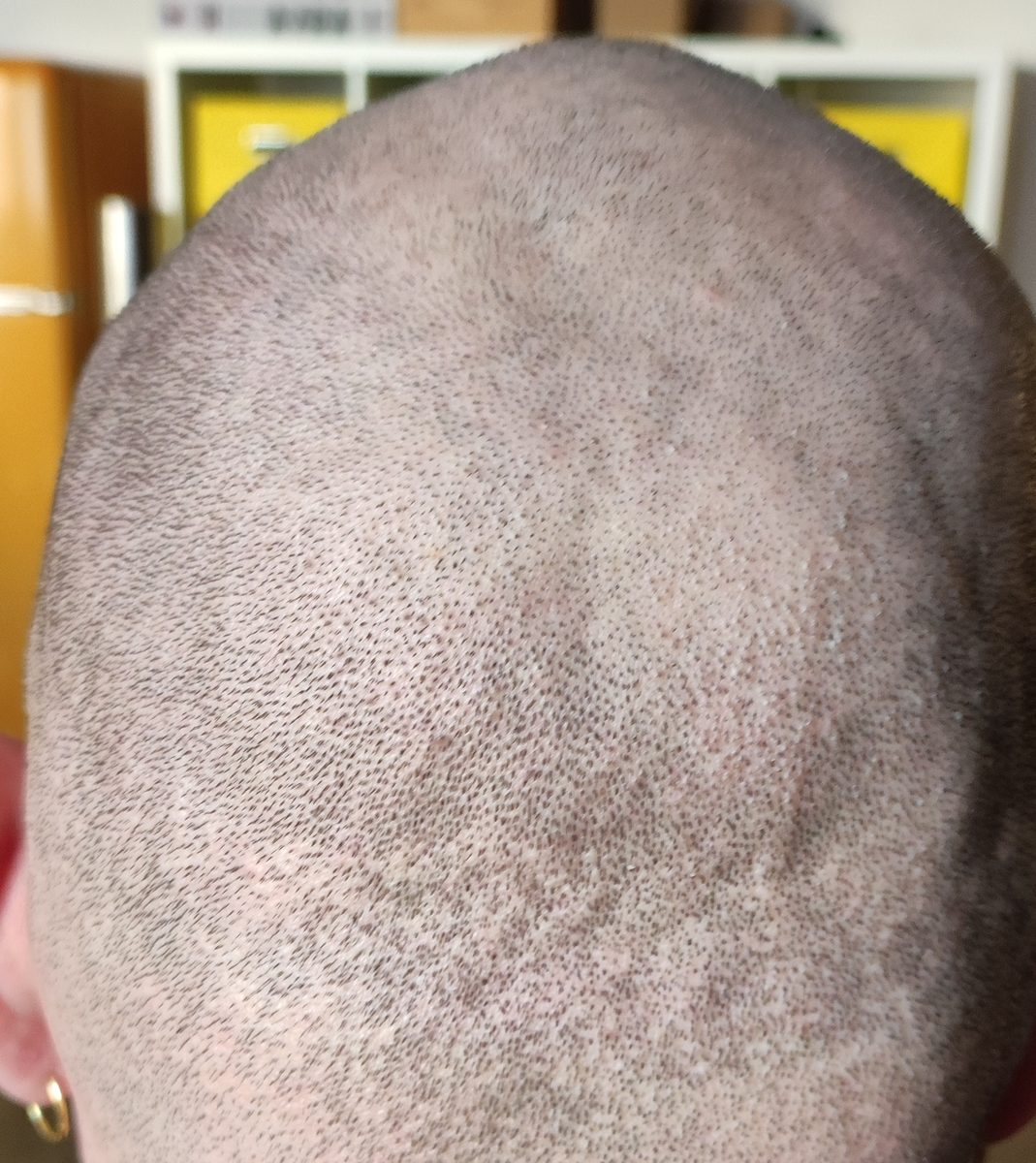
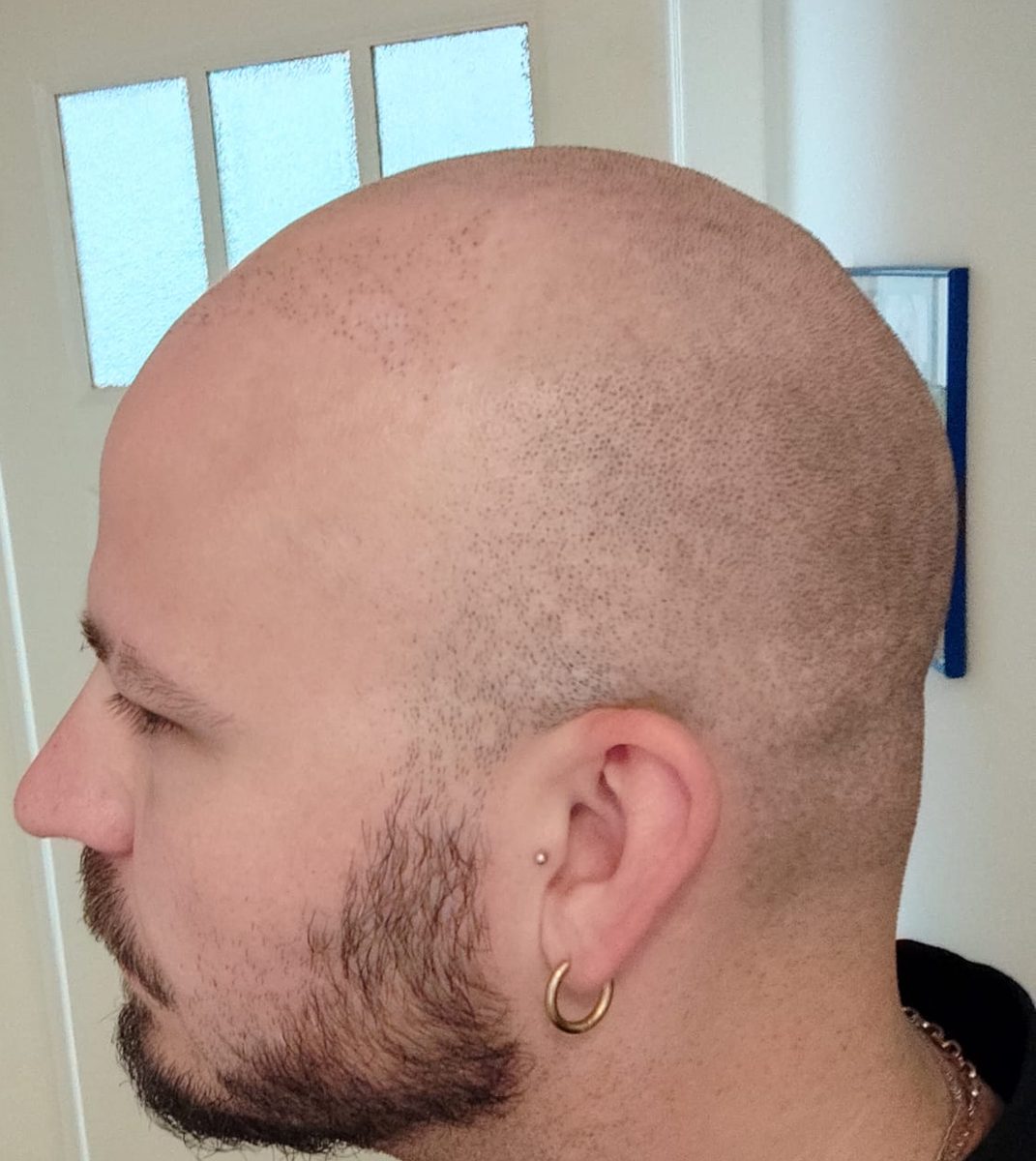
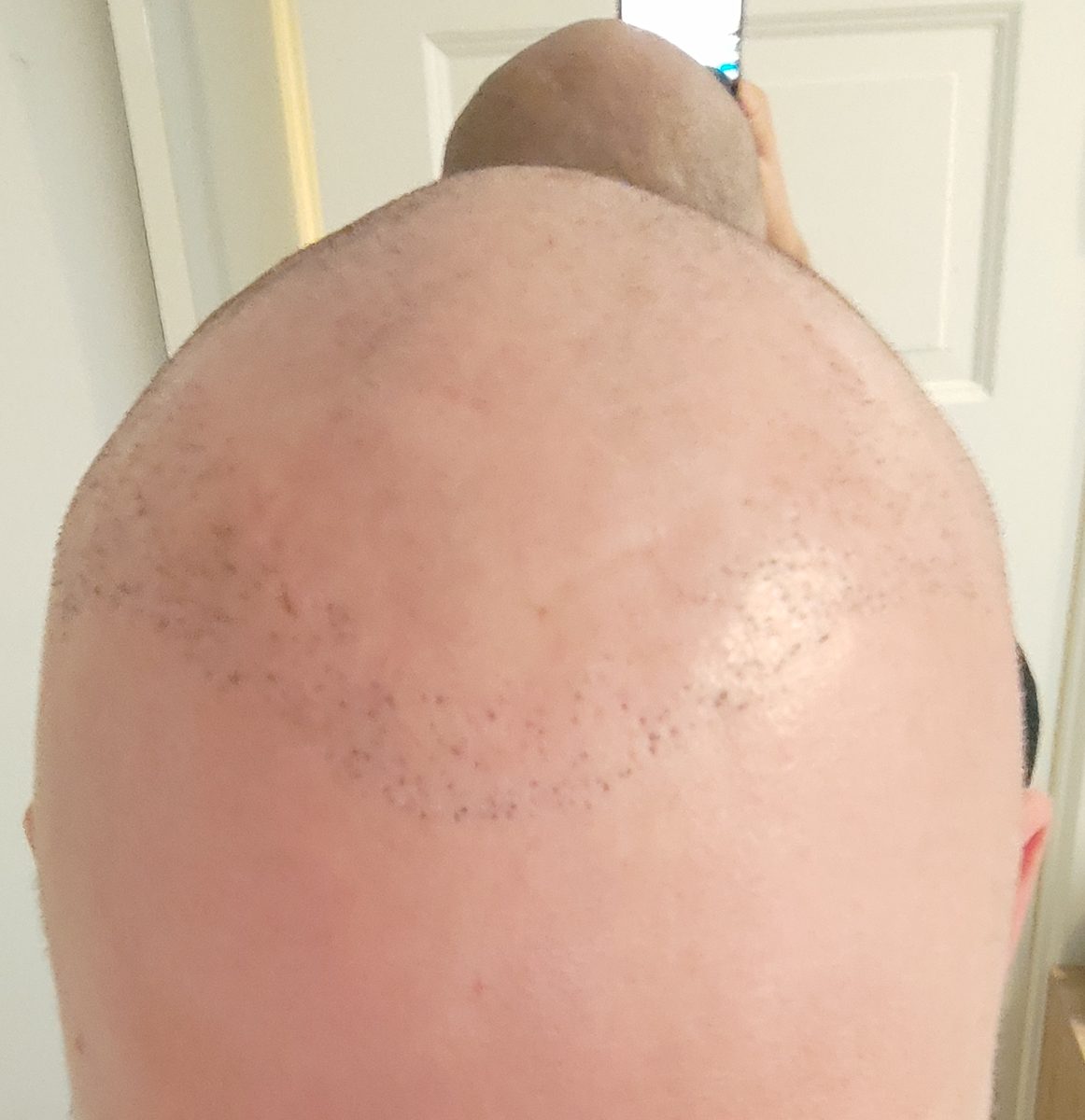
Nobody puts this bit on a website, which is why I have. My first transplant failed. And it didn't just not grow, it permanently changed what any surgeon after that had to work with. The scarring below is across the back and sides, where they took the grafts from.
The second procedure
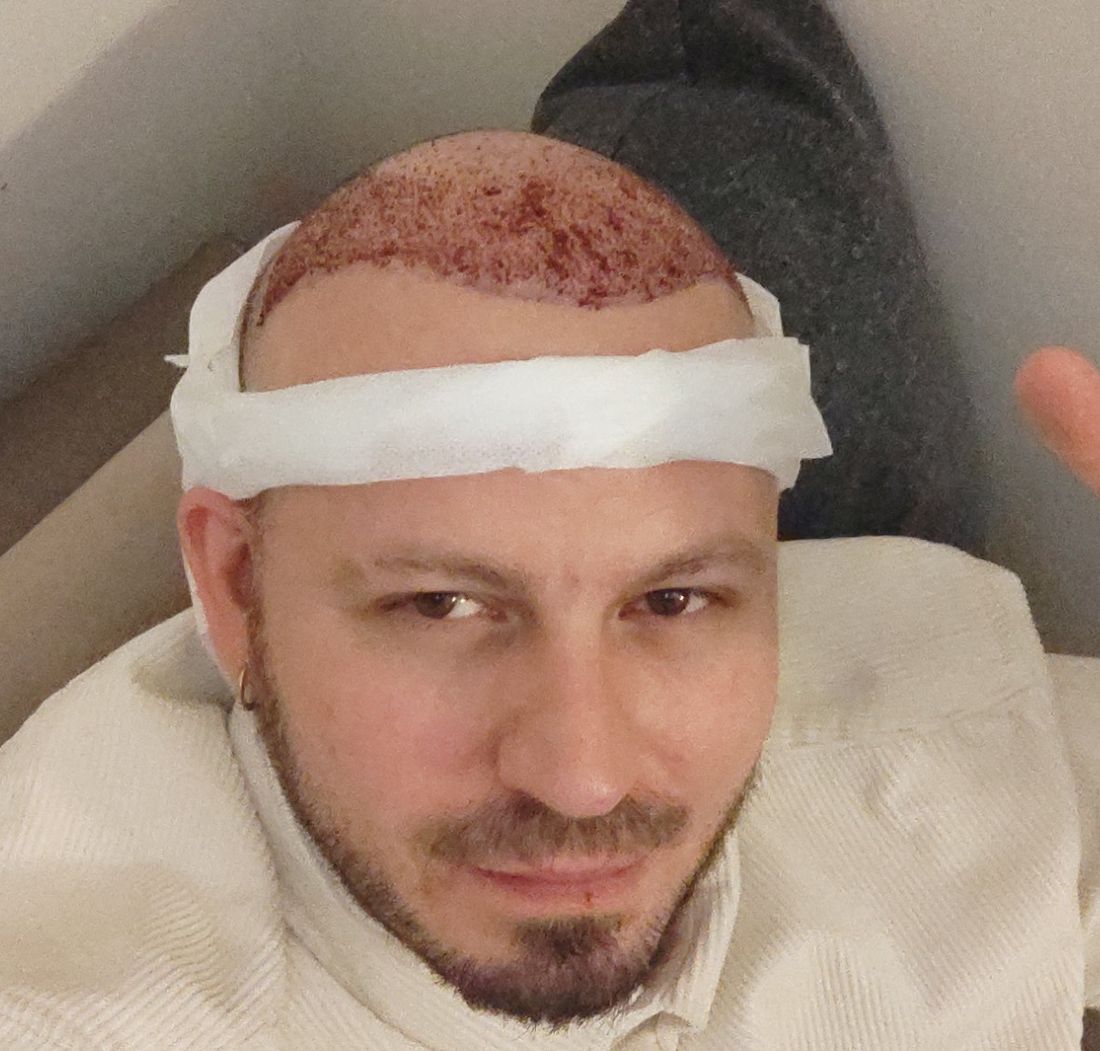
Different clinic, and this time I knew what to ask before I paid. Here's the day itself and the few days after, which is the part you don't see on anyone's website.
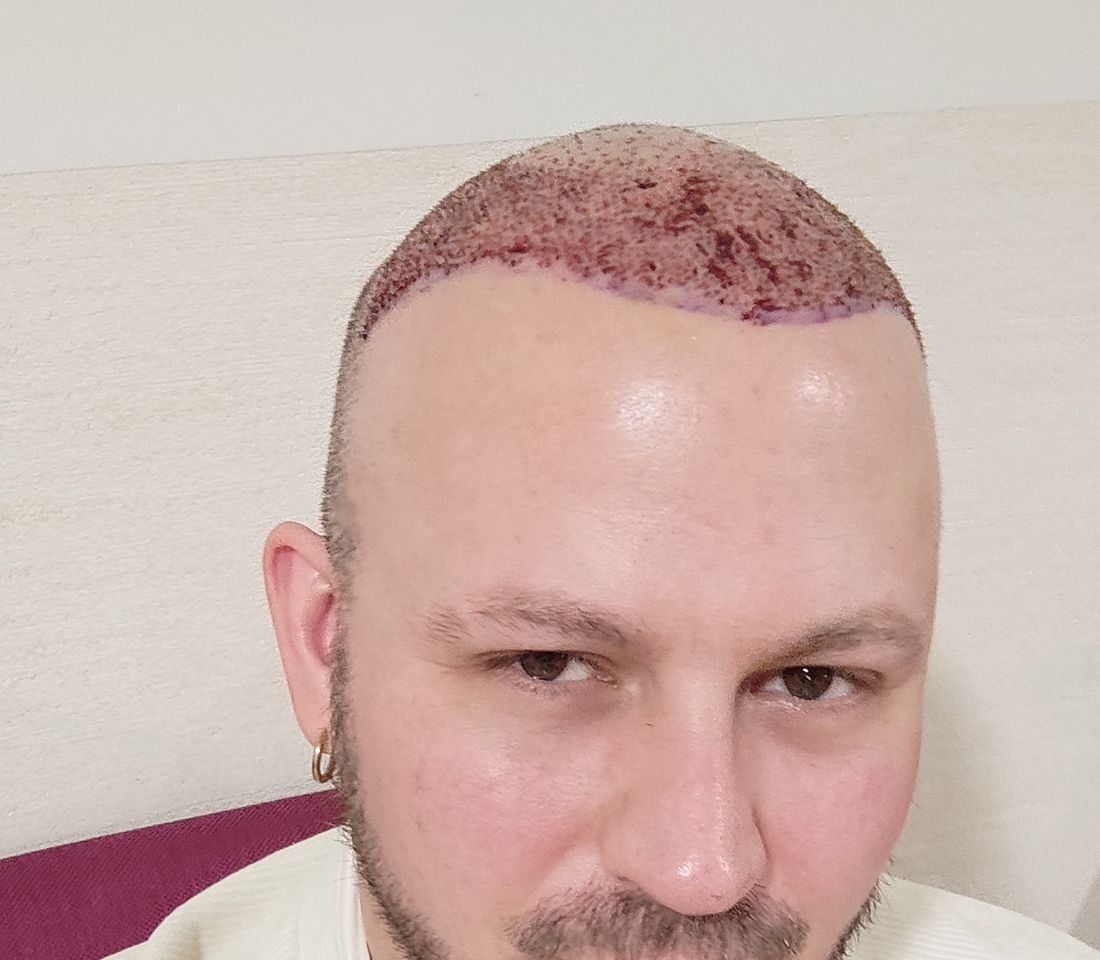
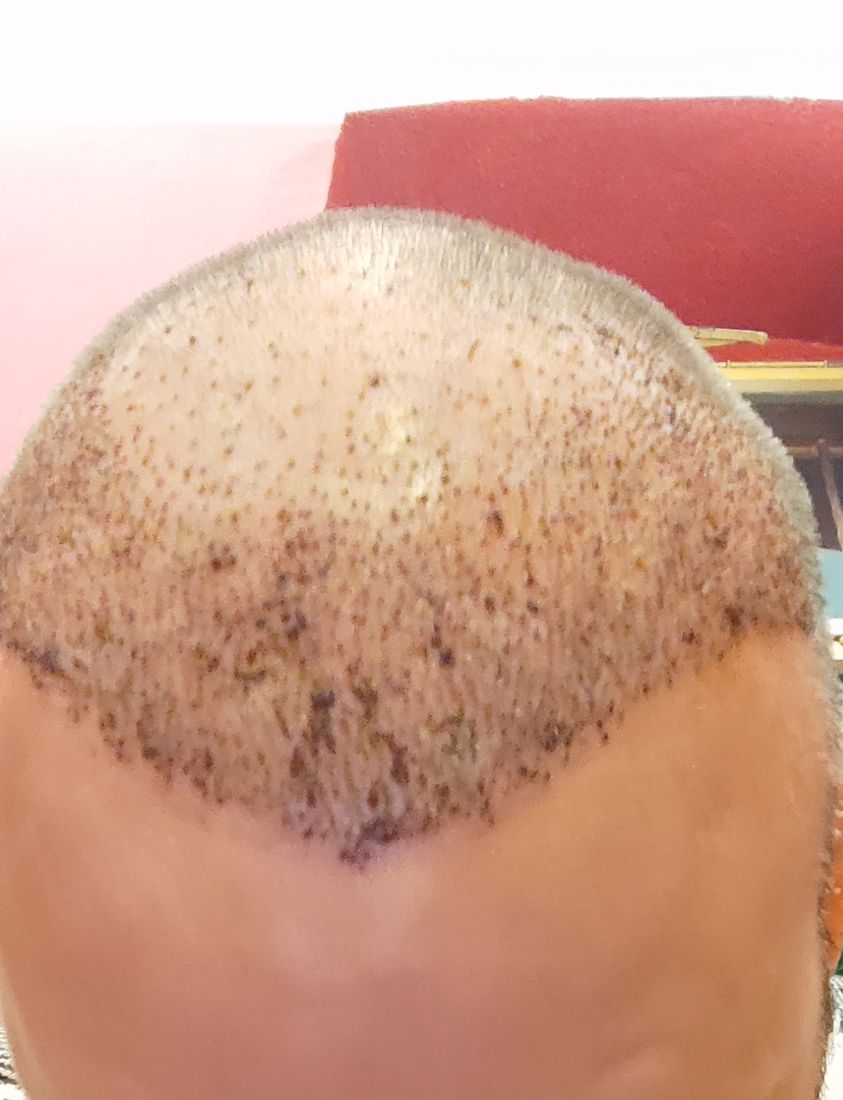
The first fortnight
The crusting clears, the redness calms down, and then around week three the lot falls out. It feels like a disaster. It isn't. It happens to nearly everyone and nobody tells you loudly enough.
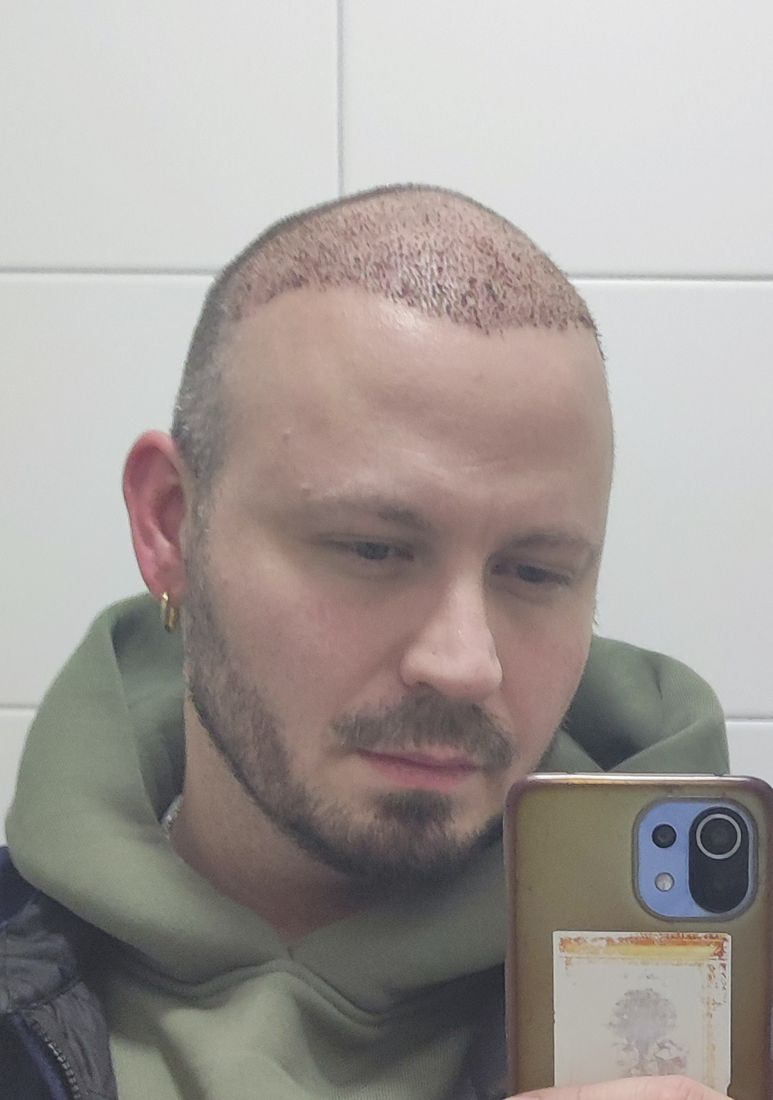
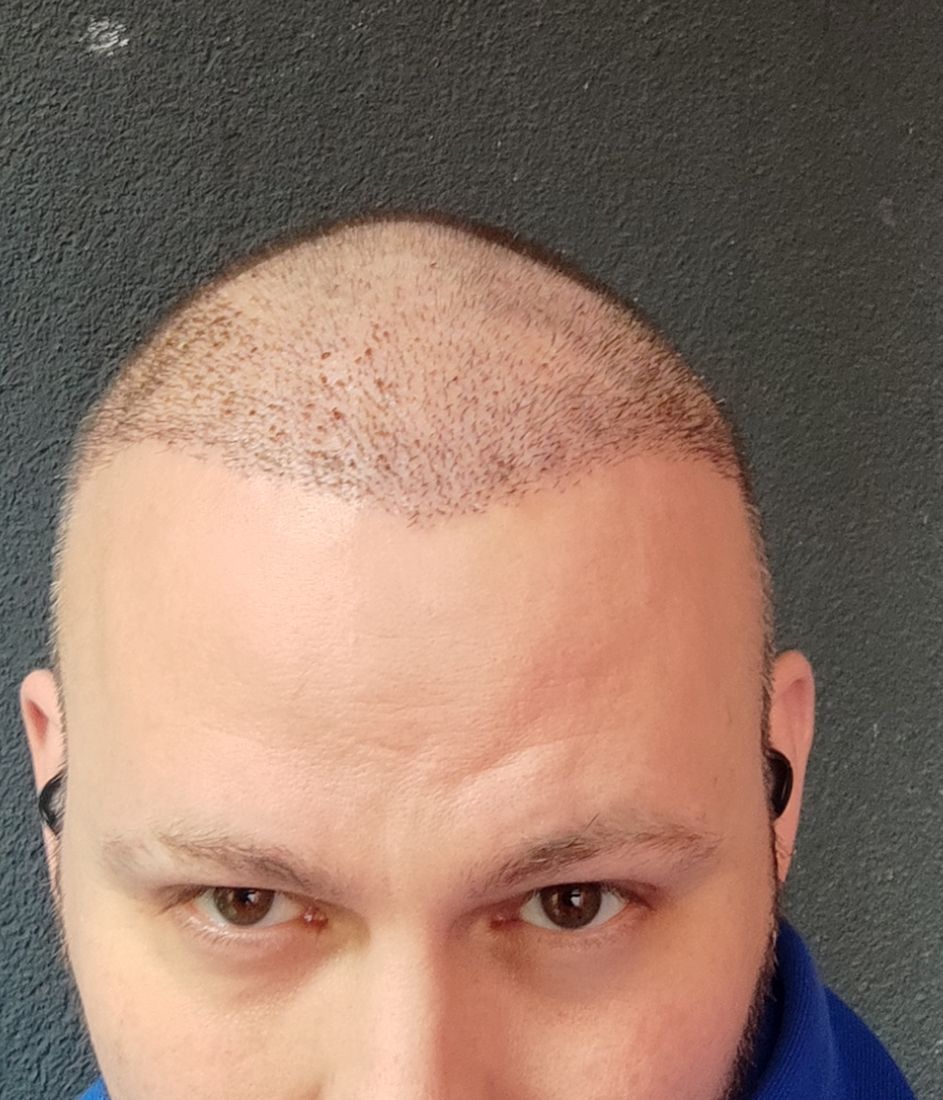
Months one to twelve
This is the long bit. After the shed, months go by where nothing seems to be happening and you start thinking you've done it again. You can't judge any of it before twelve months. Which is why a clinic that stops answering at month four is a real problem.
Read these properly. I kept getting it cut, so the length jumps about and some of the later ones look shorter than earlier ones. Look at the coverage at the hairline and temples, not the length. Which is the same problem you'll have judging anyone else's photos, mine included.
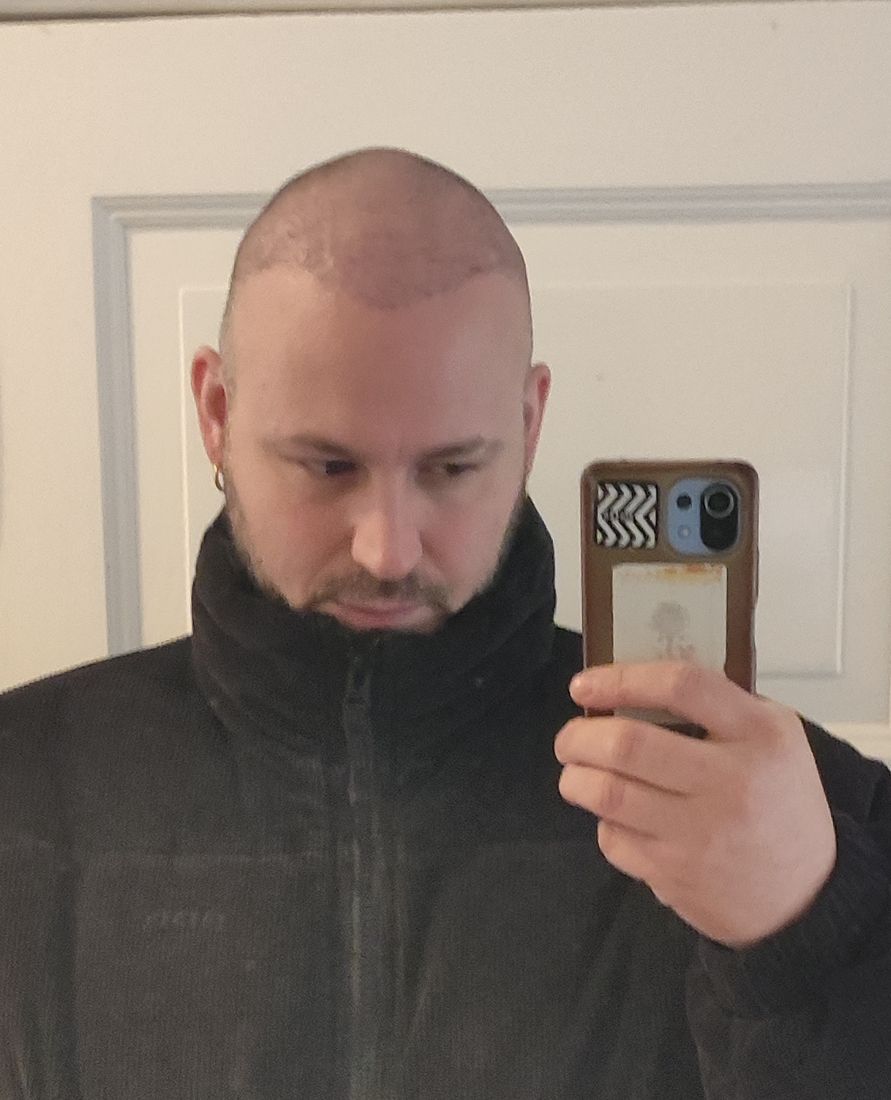
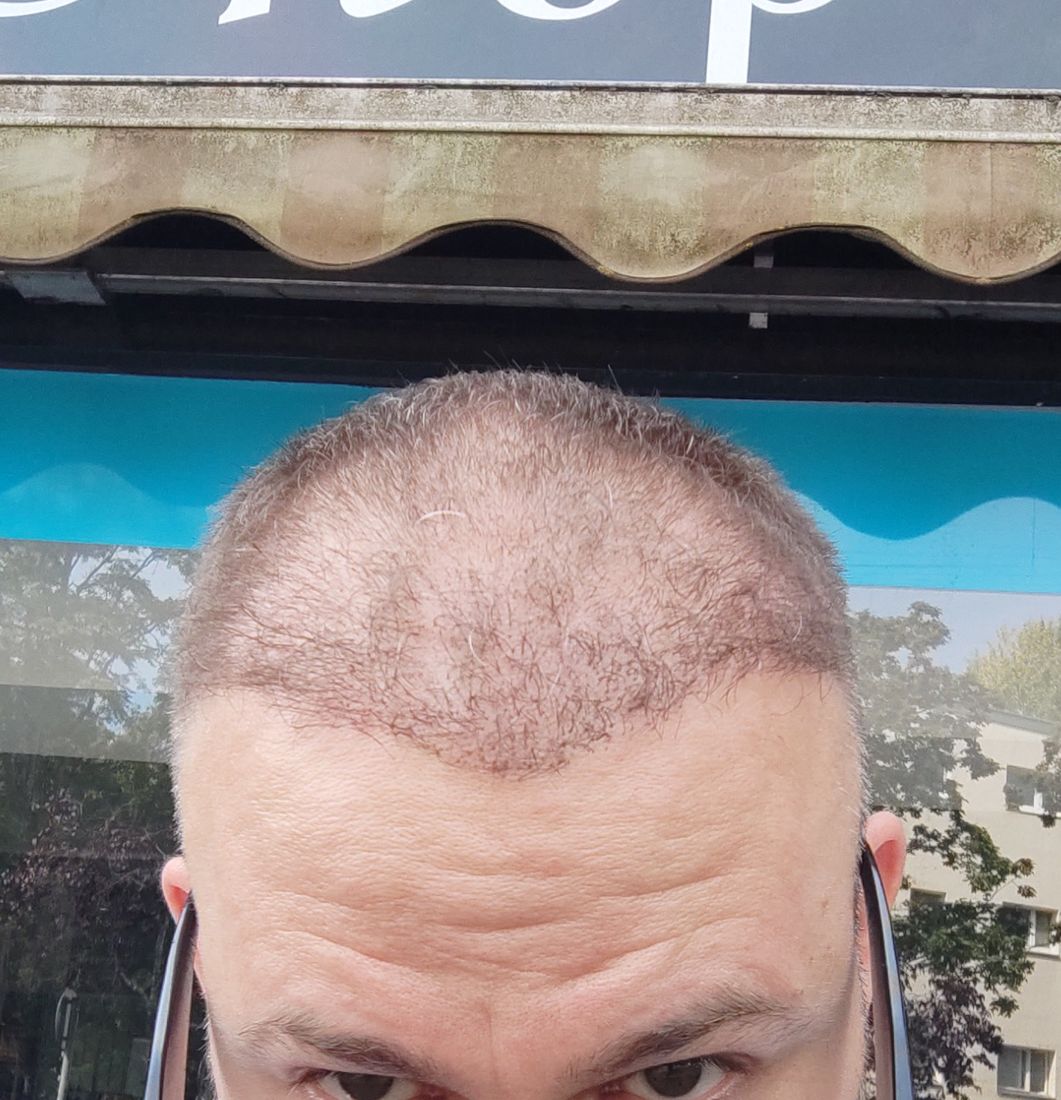
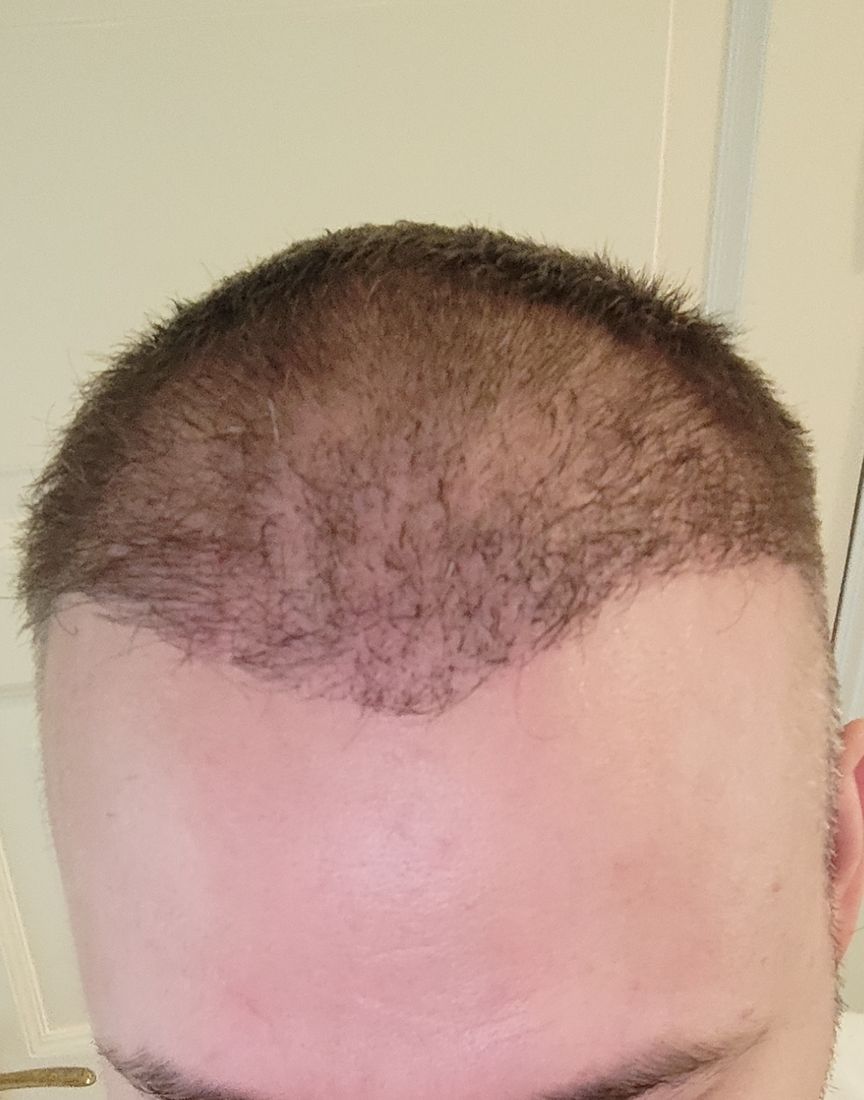
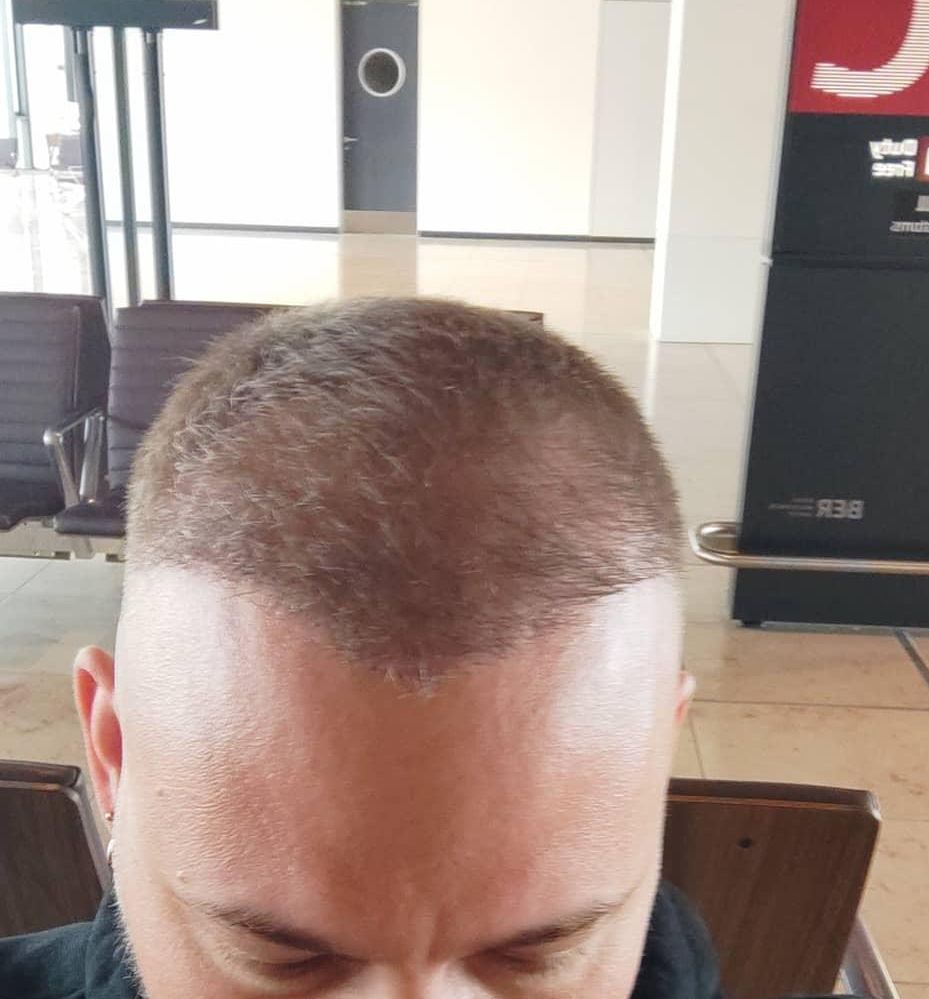


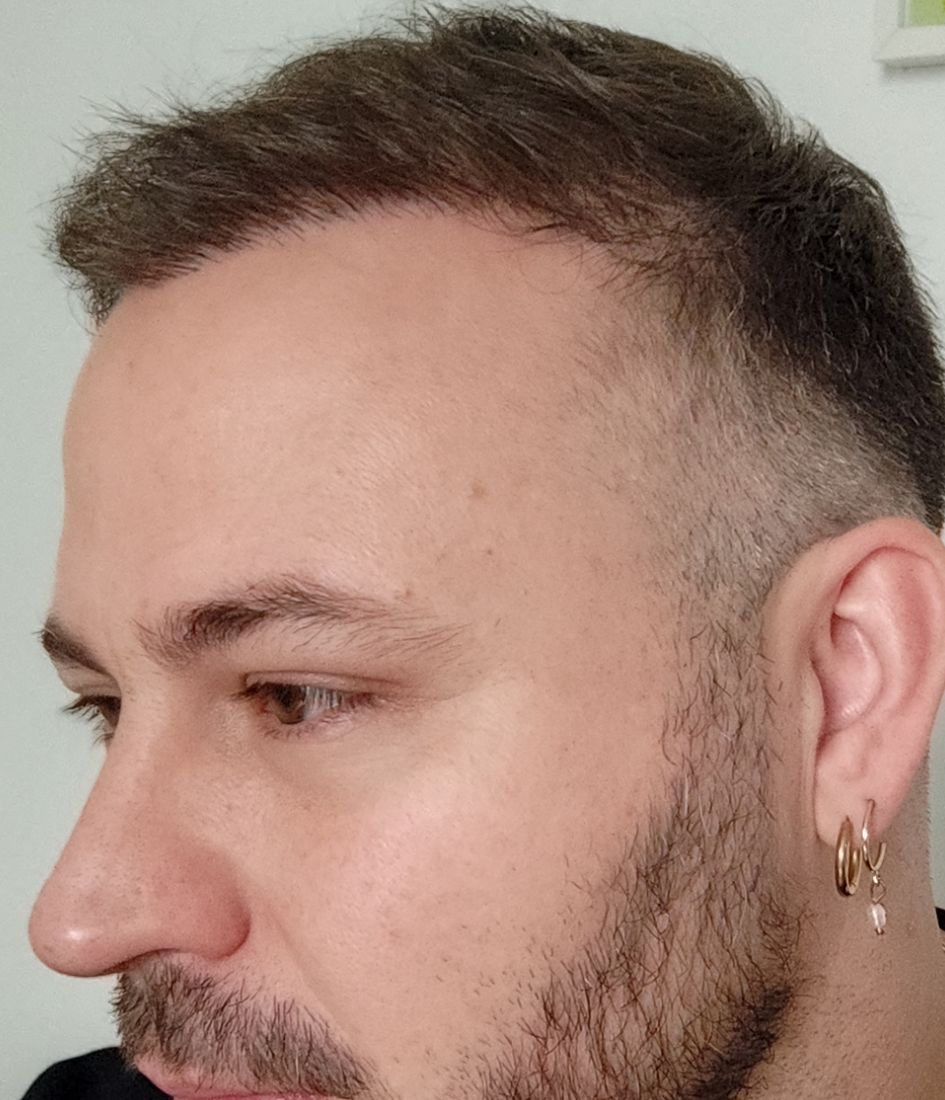

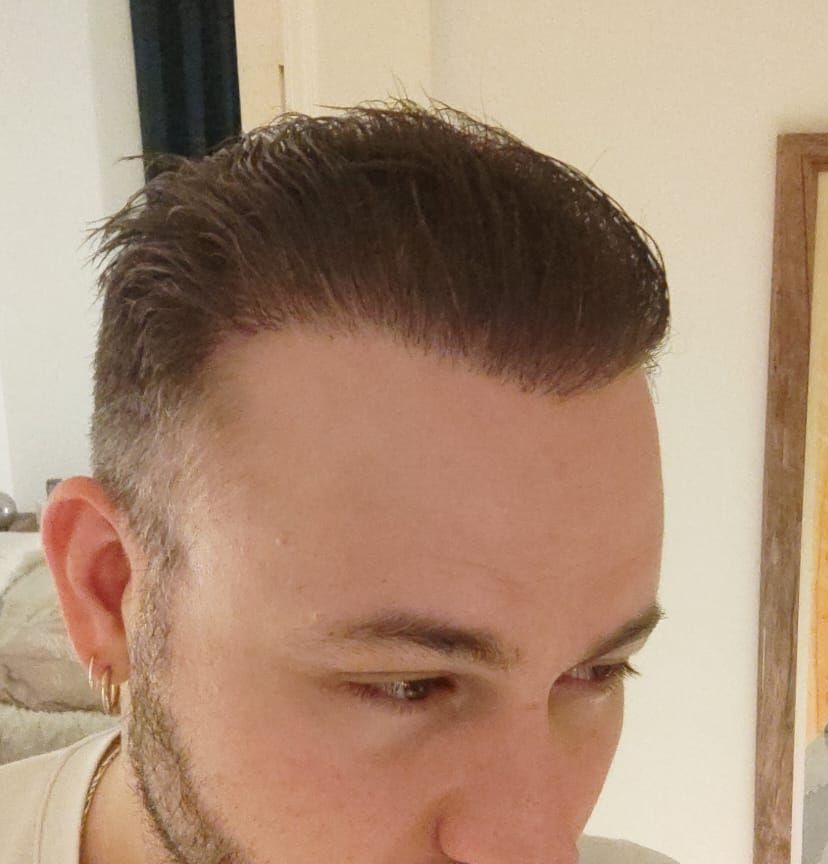
And the hardest part once I had hair again was working out what to do with it. I hadn't styled it properly in years and had no clue what cut suited me. That took me longer to sort out than the recovery did.
Now
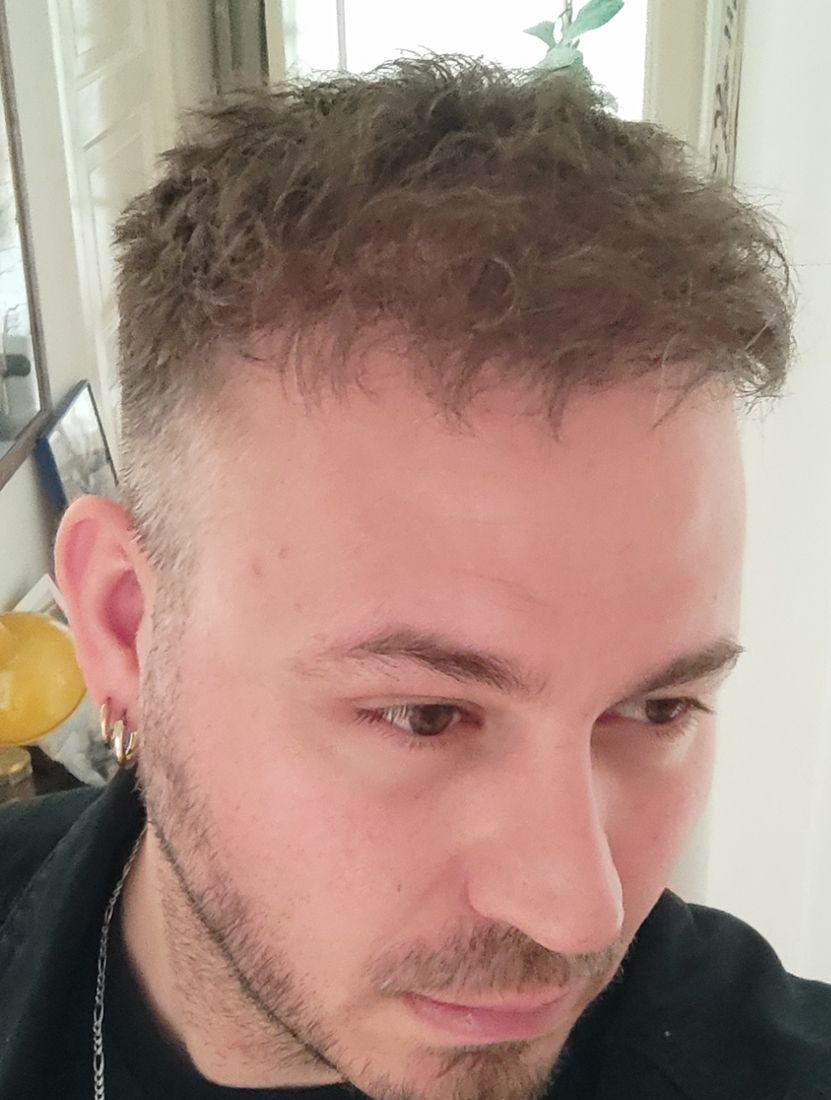
Where it's ended up. Not what I had at twenty, and I haven't turned into someone else. I've got a frame around my face again, and I've stopped doing a load of small things I didn't realise I was doing.

What I'd take from this
Two things, and neither of them is about the second one working.
The scarring on the donor area is permanent. It's not a cosmetic footnote to a procedure that didn't work. It's less hair that any surgeon can ever safely take from me. That's what choosing badly actually costs, and you can't pay to undo it afterwards.
And you can't judge any of it while it's happening. Not on the day, not at two weeks, not at four months. I spent the best part of a year not knowing, and by the time I was sure the first one had failed, every decision that caused it was long gone. That's why you ask the questions before you pay, while saying no still costs you nothing.
Frequently asked questions
What does hair transplant donor area scarring look like?
In FUE it appears as small punctate marks spread across the back and sides where grafts were taken. Individually they're tiny. Taken widely or at high density, they thin the donor area visibly, particularly once the hair is cut short, and the change is permanent.
Can donor area scarring be reversed?
Not really. The marks themselves can sometimes be improved cosmetically, and scalp micropigmentation is used to reduce their visibility, but the hair taken from that area doesn't come back and the reduction in future donor supply is permanent.
How long before you can judge a hair transplant result?
Twelve months, and eighteen is safer. Transplanted hair typically sheds at around week three, then very little visible happens for several months. Judging before a year, in either direction, isn't reliable.
Why are these photos not consistent?
Because they're the photographs I actually took at the time, on a phone, not a documented clinical set. That's deliberate. It also illustrates why inconsistent before and after images on a clinic website can't be used to draw conclusions.
These are one person's photographs and one person's outcome. Results vary considerably between individuals, and nothing here is medical advice.